Vermiglio
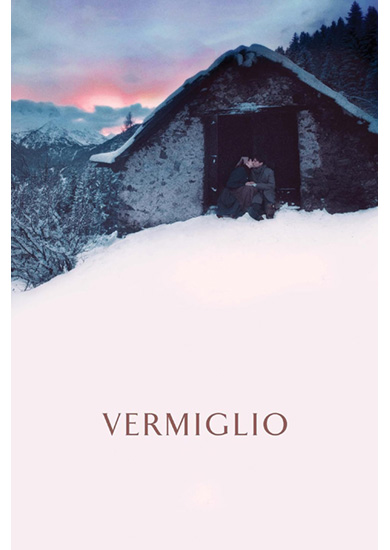
1944, Vermiglio, a remote mountain village. The arrival of Pietro, a deserter, into the family of the local teacher, and his love for the teacher's daughter, will change the course of everyone's life.
What's this?

Film Notes
‘Vermiglio’ Review: A Grave and Gorgeous Hymn to Life and Death in a Midcentury Italian Alpine Village.
Italian director Maura Delpero's "Maternal" follow-up is an intimate epic of miraculous rigor and restraint, set in a remote WWII-era mountain community.
With head bowed, over clasped hands, Italian director Maura Delpero‘s quietly breathtaking “Vermiglio” unfolds from tiny tactile details of furnishings and fabrics and the hide of a dairy cow, into a momentous vision of everyday rural existence in the high Italian Alps. Far away, the Second World War is ending — an earthshaking event felt here only in abstract ways, because there’s the real labor of community and family to be getting on with, to say nothing of the private work of finding your own path to tread beneath those towering peaks. To those who live on their slopes, the mountains must be the beginning and end of everything, the amen on every prayer.
It is winter and a sleeping household, with two or three to a bed, gradually stirs. The eldest daughter Lucia (Martina Scrinzi) milks the cow, dreamily resting her face, which she has apparently stolen from a Vermeer painting, against the animal’s warm flank. Her mother Adele (Roberta Rovelli) will heat the milk and dole it out among her seven children, along with hunks of dipping-bread for breakfast. Automatically, the jostling kids (mostly non-professionals delivering effortless naturalism) arrange themselves in order of size at the stout table around which so much of this family’s life is centered. And at its head, always, sits Adele’s husband Caesar (Tommaso Ragno), a stern but not unloving patriarch with the sonorous voice of a man used to being obeyed, who runs the local one-room school where all of his kids, bar his youngest, sickly infant, are taught the same lessons regardless of age.
Over the course of the changing seasons, the gaze of Mikhail Krichman’s magnificently austere, self-possessed camera is divided among the many family members, catching each of them at work or rest as the carbolic-scrubbed harshness of their daily domestic routines is offset by community gatherings and bursts of play and those times when Caesar brings his beloved gramophone into the classroom and teaches his students to hear the summer in Vivaldi’s music.
While other relationships are outlined — eldest son Dino (Patrick Gardner) is surly and resentful toward his father, flirtatious neighbor Virginia (Carlotta Gamba) causes a flutter of sexual confusion — focus is pulled gradually onto Caesar’s daughters. There’s Flavia (Anna Thaler), the smart one who is destined to win the only chance for a proper education that the family can afford. There’s Ada (Rachele Potrich) the strange, dark one with her notebook full of self-devised atonements for the sinful times she sneaks behind the wardrobe door to touch herself. And there’s pretty Lucia falling for Pietro (Giuseppe De Domenico), a soulful-eyed soldier from Sicily who saved her uncle’s life and then deserted with him to hide out in the village.
Lucia and Pietro’s romance is told in glances and fumbles and the illiterate love notes that the young man, who speaks a different dialect, delivers through the bedroom window. Meanwhile the old, non-military-age men who gather in the village argue over the wisdom of hiding the outsider. “Deserters are nothing but cowards!” declaims one tipsy blowhard. “If only they were all cowards, there wouldn’t be any war,” observes Caesar mildly. Soon, there’ll be a wedding and another pregnancy and though life in these parts is hard and a certain amount of tragedy is expected, the calamity, when it comes, will be, like all calamities, unforeseen.
The editing by Luca Mattei is evocative through economy: simply by cutting from Adele superstitiously wrapping her ailing infant son in cabbage leaves, to a shot of the falling snow, we understand — even before we see Adele, already pregnant again, grieving at a little cross — that in the interim, the child has died. But then, economy is the watchword of this deceptively formalist film: every aspect of the filmmaking, from Krichman’s immaculate compositions, to the worn, neat costuming from Andrea Cavalletto to the simplicity of Matteo Franceschini’s spartan piano-based score, speaks to the restraint that Delpero exercises in playing on our feelings. Not because she herself does not feel, but because, like her stoic characters, she is holding herself in check with an almost brutal degree of self-discipline. It contributes to a fascinating narrative remove, which is belied by the close-up clarity of the imagery, but then, up here in the clean alpine air, no matter how distant your vantage point, you can see forever.
None of us has to go very far back in our family history before stumbling on a gap in the generational, hand-me-down memories that no living relative can fill. The remarkable, raw-boned and ravishing “Vermiglio” takes place in the past but operates like a future family secret playing out in the present tense, a perspective that is not quite Godlike, but comes from that which we might as well call God — the spirit of the mothers and the sisters and the daughters who came before and after, and who trusted the imperious mountains to keep their secrets.
Jessica Kiang, Variety, Sep 2, 2024.
Vermiglio review – exquisite Italian Alps wartime drama.
Second world war deserters upset the lives of an isolated mountain community in this outstanding second feature from Maura Delpero
The year is 1944. But the remote Italian Alpine village of Vermiglio is a place of timeless rhythms and rituals, unchanged for centuries. There’s a precarious poetry to life in this ice-bound little community: the clear, widescreen drama of the backdrop is a contrast to the darker reality of a brutally high infant mortality rate and perpetual gnawing hunger. It’s a world away from the war consuming the rest of Europe. But then the ragged edges of combat finally reach the mountain: two deserters – Attilio (Santiago Fondevila), a son of the village, and Pietro (Giuseppe De Domenico), a stranger from Sicily – take shelter within the community. Lucia (Martina Scrinzi), the oldest daughter of the stern village teacher, is drawn to the stranger, and a tentative romance blossoms into marriage. But their union sets in motion a string of devastating consequences.
The second feature from Italian director Maura Delpero (her debut, Maternal, was a minor festival success), Vermiglio is exquisite. There’s a rough, earthy tenderness to the picture and a kinship with other recent examples of Italian folk cinema (including Alice Rohrwacher’s work, and Laura Samani’s Small Body). Delpero opts for an unvarnished realism rather than the pagan abandon of some of Rohrwacher’s cinema, but her film shares the sense of exploring a richly realised, self-contained microcosm.
An unprecedented scandal shakes the community midway through the story. It has a seismic impact on the villagers; it also shifts the film-making approach. From the intimate restraint of the early scenes, Delpero’s direction becomes more fractured and abrasive. It’s a remarkable work.
Wendy Ide, The Observer, 18 January 2025.
What you thought about Vermiglio
Film Responses
| Excellent | Good | Average | Poor | Very Poor |
|---|---|---|---|---|
| 18 (37%) | 21 (43%) | 9 (18%) | 1 (2%) | 0 (0%) |
|
Total Number of Responses: 49 Film Score (0-5): 4.14 |
||||
Collated Response Comments
110 members and guests attended this screening. We received 49 responses giving a film score of 4.14 and a response rate of 44%.
Thanks so much for all of your comments. They are all collected below.
“For me this was quite a different cinematic experience. The way the Director chose to film it, and script it, with lingering or slow moving shots and either no dialogue or indistinct dialogue (e.g. the card players) without subtitles, left it up to the viewer to fill in the likely conversation. We were again left to imagine the actions when Lucia runs away leaving her new baby, now fatherless, and the camera lingers beautifully on the waterfall. Given that the story was old and much of the detail would not have been known anyway, it seems entirely appropriate that we are left to imagine much of the action ourselves. More practically, I wonder how they managed to survive at all in such harsh conditions”.
“The natural performances by cast with very few professionals draws you into this quite restrained drama, the emotion underplayed yet feels accurate. The reveal of family secrets that change individual lives, especially the multi-layered female characters whose sexuality is apparent. Not much evidence of them being modest and obedient women as the older ones seem under domestic or rural drudgery. Delpero's clear vision highlights a marked divide between the gender roles and age. She reproduces the time towards the end of WW2 strikingly, as well as stripping out the town's culture; a closeness to God, war gossip framing everyone's social standing in a defined caste system. Quite fascinating and feels like you're there. Yet the population is quite knowledgeable (most can read), show an interest in the world via maps with family head and teacher Caesar (autocrat, 'a cut above') liking Vivaldi and Chopin as music is food for the soul. The lingering shots of the area as winter moves to spring brings changes. Family tenderness apparent, Pietro is introduced a gentle romance with Lucia unfolds alongside a loneliness as they find their way round the vastness of the mountains. A good film”.
“Visually beautiful but confusing. I enjoyed the film's portrayal of largely women's experiences of war through a collage of references to literature and especially art -- Vermeer, Chopin, Vivaldi, and others -- which gave it a certain beauty. The stunning mountains and white palette (snow and clothing) create an elegant façade, but the story is haunting in its quiet depiction of emotional violence and generational abuse within a patriarchal system, creating a smothering, enclosed atmosphere that made me feel uncomfortable. The film begins and ends with the sound of a baby, but despite the seemingly hopeful final image, the altered ending of Chopin's nocturne sounded less hopeful, which I found disappointing. It left me feeling confused, but if that sense of disorientation was the point of the film, then I suppose it succeeded. Thank you”.
“If you have been disappointed by the cinematic attempts to render the universe of Thomas Hardy look no further. It is all here; a beautiful but harsh landscape from which a living can be scraped with considerable effort, a marginal but warm society of long tradition that walks a fine existential line. A world of few opportunities, especially for women. Initially this is beautifully drawn, the sequence of vignettes do, very much, have the air of stuff born of deep memory and the characters are sketched fondly. Into this world, in true Hardy fashion, a male outsider arrives to disrupt the precarious balance of village life. As destructive as this becomes there is the suggestion in the finale that order will return, everyone will find their place, albeit with extra mouths to feed and fewer hands to do so. As a portrait of lives of women in such communities, it offers harsh choices and little encouragement, the exhausted figure of Adele is particularly grim, no longer willing to offer Flavia comfort with her first period. The film does not tell us what happens to Virginia for whom there is surely no appropriate niche in the community and Ada is cocooned by the church from a life more interesting. Visually stunning, stark, honest and with no easy answers. Excellent”.
“Very Slow”. “very slow!”
“I really enjoyed this captivating story set during WW2 with the beautiful scenic views of Northern Italy. Well deserved Awards!”
“Stunning cinematography and so evocative with tones and colours well observed. Each frame beautifully composed to create a real work of art”.
“A real-life story, graphically told”.
“What a beautiful film. But very sad. Incredible scenario. I could not see the ‘patchwork’ mentioned in the review”.
“Wonderfully filmed. A slow - burning story full of beautifully observed detail of isolated family life”.
“Great acting, great scenery, great image of village life”.
“A lovely study”.
“Beautiful and courageous. Thank you so much”.
“Beautiful film – scenery and people wonderful”.
“Complex and subtle. Marvellous performances from the children”.
“Beautiful film”.
“Beautiful cinematography and great performance by all the children”.
“Excellent camera work. An unusual essay of emotions. Difficult to follow!”
“Amazing photography and atmosphere”.
“Very heavy film – life is tough. Well done”.
“Little too long”.
“A very real story”.
“Very slow, sometimes disjointed. Good acting, beautifully filmed”.
“Slow with unfinished stories”.
“Countryside lovely. Took some time to get going”.
“Very good but heavy because ordinary life is hard”.
“Beautiful and cinematography”.
“Very unusual way of presenting a film; the lack of music though most matches the sober and solemn mood. However, interesting lives left me wanting to continue doing their life stories. Got lost a few times”.
“Excellent actors and actresses + children BUT BORING and a sad ending”.
“Great camera work. Fascinating but very low key”.
A beautiful film right up there with Babetts feast. Every frame was edited with sensitivity, the cinematography breath-taking; the courage to be slow. Thank you.
What is F-Rated?
The F-Rating is applied to all films which are:
- Directed by women
- Written by women
- Has one or more significant women on screen
If it qualifies with one of the above it gets the Bronze rating.

If it qualifies with two of the above it gets the Silver rating.

If it qualifies with all three of the above it gets the Gold rating.
What is F-Rated?
The F-Rating is applied to all films which are:
- Directed by women
- Written by women
- Has one or more significant women on screen
If it qualifies with one of the above it gets the Bronze rating.
If it qualifies with two of the above it gets the Silver rating.
If it qualifies with all three of the above it gets the Gold rating.